
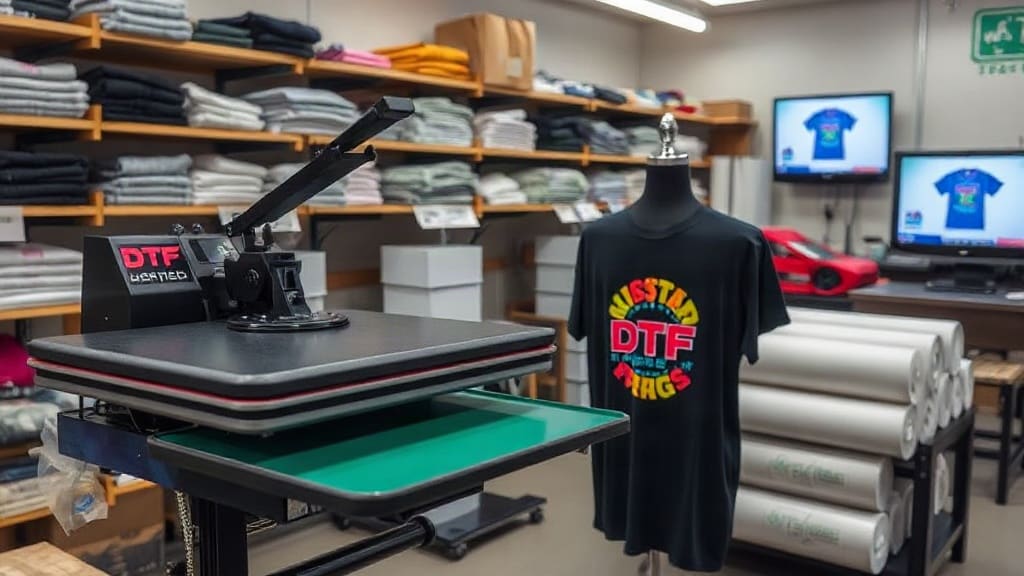
If you're looking to start a custom apparel business or simply want to print your own designs, you've probably searched for dtf transfers near me. Direct-to-film printing has exploded in popularity because it offers vibrant colors, excellent durability, and the ability to print on a wide range of fabrics. But finding a reliable provider isn't always straightforward. In this guide, I'll walk you through everything you need to know, from understanding what makes a great transfer to evaluating local print shops and even making your own if you're so inclined.
What Are DTF Transfers and Why Should You Care?
DTF (direct-to-film) transfers are a method of printing your designs onto a special film, which is then transferred to fabric using a heat press. Unlike traditional screen printing, DTF allows for full-color prints with no color limitations, and it works beautifully on cotton, polyester, blends, and even performance fabrics. Because the process doesn't require screens or setup fees, it's perfect for small runs and one-off custom orders.
The key advantage is the vibrancy and stretchability of the final print. When you search for dtf transfers near me, you're looking for a service that can produce high-quality transfers that will stick firmly to your garments and withstand repeated washing without cracking or fading.
How to Find DTF Transfer Providers in Your Area
Start with a Simple Search and Refine
Begin with a straightforward search for dtf transfers near me on Google Maps or a search engine. You'll likely see a list of local printing shops, but not all of them specialize in DTF. Look for those that mention 'direct-to-film' or 'DTF transfers' explicitly on their websites. You can also check online directories like Yelp, where customer reviews can give you insights into the quality and reliability of the service.
Check Social Media and Community Boards
Local Facebook groups, Reddit communities, and even Nextdoor can be goldmines for recommendations. Search for terms like 'custom t-shirt printing' or 'DTF printer' in these groups. Often, other small business owners will share their experiences, both good and bad, with local providers. This can help you narrow down your options before you even pick up the phone.
Visit Local Print Shops in Person
If possible, visit a few shops in your area. Seeing the equipment and asking questions face-to-face can reveal a lot about their professionalism. Bring a sample design and ask for a quote. A reputable shop will be happy to explain their process, turnaround times, and pricing structure.
Key Factors to Evaluate When Choosing a Provider
Quality: The Most Crucial Aspect
Not all DTF transfers are created equal. When you're comparing options, ask to see samples of their previous work. Look for prints that have been washed multiple times. Check for color vibrancy, edge sharpness, and whether the print has any tendency to crack. A high-quality transfer should feel like part of the fabric, not a sticker on top of it.
Also, examine the film used. Some providers use a thinner film that can wrinkle easily during application. A good provider will use a film that is sturdy enough to handle the heat press but not so thick that it leaves a noticeable plastic feel on the garment.
Pricing: It's Not Just About the Lowest Quote
While it's tempting to go with the cheapest option, remember that you often get what you pay for. Low prices might mean lower-quality materials or rushed production, which could lead to prints that crack or fade after a few washes. Compare prices from different providers, but also consider the value they offer. Are they including shipping? Do they offer discounts for bulk orders? What is their minimum order quantity?
Turnaround Time: How Fast Do You Need It?
If you're running a business, turnaround time is critical. Some local shops can produce transfers in 24-48 hours, while others might take a week or more. Ask about their current workload and whether they can meet your deadlines. Also, check if they offer rush services for an additional fee.
Customer Support and Communication
Good communication is essential. You want a provider who responds promptly to your inquiries and is willing to help with file setup or offer advice on design. When you call, note how they handle your questions. Are they friendly and knowledgeable? Do they explain things clearly? This can give you an idea of the level of support you'll receive throughout your order.
DIY vs. Professional Services: Weighing Your Options
Many people wonder whether they should invest in their own DTF printer and materials. While this can be cost-effective in the long run, it requires a significant upfront investment. A decent DTF printer can cost hundreds to thousands of dollars, plus you'll need a heat press, films, powders, and inks. If you're just starting out or only need occasional prints, working with a professional service like dtf transfers near me is often more practical.
However, if you plan to make DTF transfers a core part of your business, investing in your own equipment might be worth it. It gives you complete control over the process and allows you to offer printing services to others. Just be prepared for a learning curve and ongoing maintenance.
Common Mistakes to Avoid When Ordering DTF Transfers
Skipping the Test Print
Always request a test print before placing a large order. This allows you to verify the colors, sizing, and overall appearance on your specific fabric. A test print is a small price to pay to avoid wasting money on a batch that doesn't meet your expectations.
Ignoring File Requirements
Different providers have different file requirements. Some prefer PDF, others PNG with transparency. Make sure your files are high-resolution (300 DPI) and have the correct color profile (usually CMYK). If you're unsure, ask the provider for their specifications. Ignoring these can result in blurry or incorrectly colored prints.
Not Considering Fabric Compatibility
While DTF works on many fabrics, it's not ideal for very stretchy materials like spandex or for items that will be exposed to extreme heat (like oven mitts). Make sure your provider knows what type of fabric you'll be applying the transfers to, so they can recommend the appropriate adhesive and settings.
The Future of DTF Printing and Local Trends
The DTF market is growing rapidly, and it's likely to continue evolving. Advances in inks and films are making the process even more durable and environmentally friendly. Some providers are now offering white ink that is more opaque, allowing for prints on dark garments without a white base layer. Others are experimenting with special effects like glitter or metallic finishes.
As technology improves, the cost of DTF printing is likely to decrease, making it accessible to even more small businesses. If you're thinking about entering the custom apparel space, there has never been a better time to explore your options.
Frequently Asked Questions
How long do DTF transfers last?
With proper application and care, DTF transfers can last for many washes. Typically, they remain vibrant and crack-free for 50-100 washes, depending on the fabric, washing temperature, and tumble drying. To extend their life, wash garments inside out in cold water and avoid using bleach or fabric softeners.
Can I use DTF transfers on any fabric?
DTF transfers work best on cotton, cotton blends, polyester, and nylon. They can also be used on some performance fabrics, but you may need to adjust the press settings. For fabrics with a very high stretch, like spandex, the transfer may crack or peel over time because it doesn't stretch as much as the fabric. It's always a good idea to test on a small piece of the fabric first.
What is the minimum order for a local DTF provider?
Minimum order quantities vary widely. Some shops allow you to order just one transfer, while others require a minimum of 20 or more. If you're just starting out, look for a provider that offers no minimums or low minimums, so you can test the waters without a large investment.
How much do DTF transfers cost compared to screen printing?
For small quantities (say, less than 50 pieces), DTF transfers are generally more cost-effective than screen printing because there are no setup fees. As order sizes increase, screen printing becomes cheaper per unit. However, DTF offers more flexibility for full-color designs and quick turnaround. For most small businesses and hobbyists, DTF is the smarter choice.
Can I apply DTF transfers with a home iron?
While it's possible to apply DTF transfers with a home iron, the results are often inconsistent. A heat press provides even pressure and temperature, which is crucial for a strong bond. If you plan to make this a regular activity, consider investing in a basic heat press. For occasional use, a high-quality iron may work if you use a pressing cloth and apply firm pressure, but be prepared for potential issues with durability.