
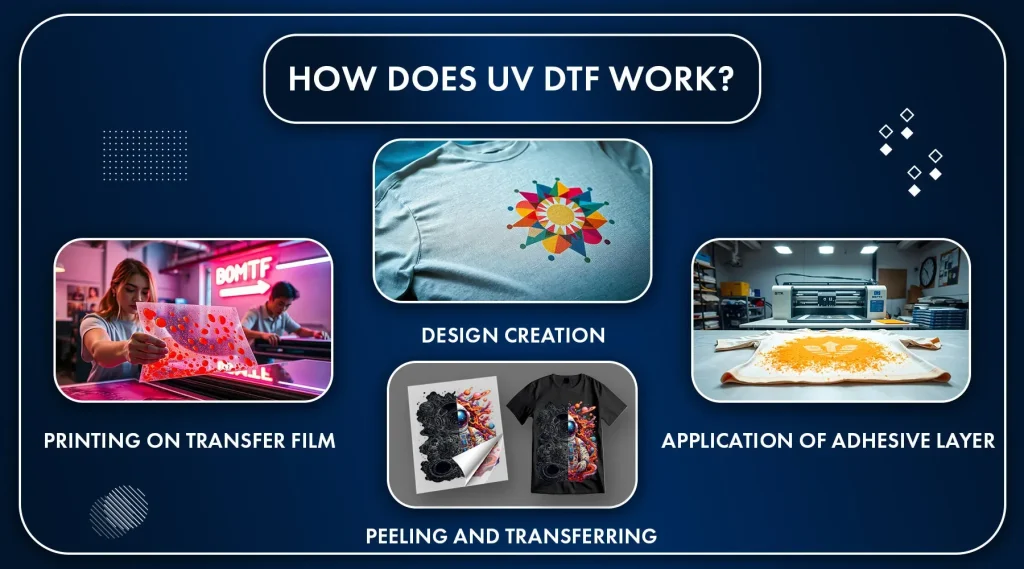
In the fast-paced world of garment decoration, meeting tight deadlines hinges on speed and accuracy. The UV DTF transfer workflow moves a design from concept through file prep to fabric, pairing digital art with UV-curable processes. From design and prepress to printing, curing, and final transfer, every step must align with the next to ensure a reliable result. This guide breaks down the design-to-finish path and shares practical tips to optimize the entire pipeline from concept to customer delivery. Within this framework you’ll find SEO-friendly guidance and keywords such as DTF transfer optimization, UV printing tips, DTF workflow best practices, design to finish DTF process, and UV DTF design to finish, helping content reach the right audiences.
Viewed through a broader lens, this workflow is a digital textile transfer journey that begins with artwork and ends with a wear-ready print. Engineers and printers think in terms of color management, substrate compatibility, and reliable curing, rather than fixed steps. Think of it as a design-to-finish pipeline that uses UV-curable inks on film, a dedicated adhesive, and a heat-press cycle to lock the image into the fabric. By framing the process as a cohesive system—design, print, cure, and apply—you can optimize quality, minimize waste, and shorten lead times for customers.
Design to Finish DTF Process: From Concept to Transfer
In the design-to-finish DTF process, success starts with a clear concept and scalable artwork. Build with vector outlines for crisp edges, plan color strategy to anticipate CMYK limits, and include white ink on dark fabrics when necessary. Soft-proof against target substrates to catch issues early and set expectations for production. This phase anchors the UV DTF transfer workflow by ensuring the final output matches the client’s vision.
By integrating design decisions with prepress constraints, teams can minimize iterations and speed the handoff to printing. Align file prep with substrate characteristics, determine margins and bleeds, and verify that the artwork translates well when printed on the transfer film. This stage is a core part of the design to finish DTF process.
DTF Transfer Optimization: Boosting Throughput Without Sacrificing Quality
Optimization spans standardizing file prep, color management, and equipment calibration. Use repeatable templates, consistent margins, and checklists to reduce rework. The goal is to uplift throughput while preserving color accuracy and edge quality.
A systematic approach—calibrating printers, curing units, and heat presses—minimizes drift. Implement a color control plan with swatches, and create a feedback loop to capture defects and adjust parameters. This is the essence of DTF transfer optimization in the UV workflow.
UV DTF Transfer Workflow: Ensuring Consistency Across Printing and Curing
The UV DTF transfer workflow spans design, printing with UV-curable inks, curing, and final transfer. Achieve consistency by aligning RIP profiles with substrates, selecting appropriate adhesives, and verifying layer order for white underbases. A well-tuned printer, film, and cure system yields predictable results. Practical UV printing tips include maintaining consistent lamp intensity, proper ink viscosity, and accurate substrate temperature to avoid edge curling.
Regular checks at each stage—color fidelity after proofing, optical alignment during printing, and dwell-time validation during curing—reduce misregistration and adhesion issues. This holistic approach keeps the workflow stable and scalable across multiple jobs.
UV DTF Design to Finish: Aligning Artwork with Substrate Realities
Design choices must respect substrate behavior: white underbase opacity, color density, and film translucency. Plan color management and proofing to translate brand colors to on-press results. Consider soft proofing and ICC profiles to minimize surprises in production.
In the UV DTF design to finish loop, adjust artwork for translucency, texture, or color shifts that can occur during transfer. Verify that final prints will perform on target fabrics and finishes, and document any substrate-specific tweaks for future jobs.
DTF Workflow Best Practices: A Practical Guide for Designers and Operators
Adopt best practices covering file prep, color, and process control. Document proven parameter sets to reduce guesswork and enable smoother handoffs. DTF workflow best practices create a shared framework for design, prepress, printing, curing, and finishing.
Implement QA checkpoints, cross-functional audits, and continuous improvement loops. Share learnings across teams, from design to finishing, to elevate reliability and customer satisfaction.
Equipment, Materials, and Setup: Choosing Reliable UV DTF Components
Select a robust UV-curable ink system, compatible transfer films, and a curing method that yields repeatable results. Prioritize stability, maintenance access, and integration with your heat press. Confirm that media and adhesive choices match your common fabric types.
Test substrates for consistency and record performance across fabrics. Build a tuned ecosystem where printers, films, and curing stations are calibrated to work in concert. Regularly service components and document settings to maintain the pipeline’s reliability.
Frequently Asked Questions
What is the UV DTF transfer workflow and why is it critical to production speed and quality?
The UV DTF transfer workflow is the end-to-end process of creating and applying transfers for garments using UV-curable inks. It covers design and proofing, file preparation, printing, curing, transfer to fabric, and final inspection. A cohesive UV DTF transfer workflow aligns each step to the next, reducing waste and rework while delivering vibrant, durable results that meet deadlines.
How can I optimize the UV DTF transfer workflow for faster turnaround without sacrificing quality?
Focus on DTF transfer optimization within the UV DTF transfer workflow by standardizing file preparation, calibrating printers and curing units, and implementing a color control plan. Regularly check alignment during file‑to‑print steps, streamline material handling, verify curing performance, and build a feedback loop to drive continuous improvement.
What design considerations are essential in the design to finish DTF process?
Start with scalable artwork and sharp edges: use vector outlines for lines and high‑resolution rasters for photos. Plan color strategy for CMYK with white underlays on dark fabrics, account for film translucency, and soft-proof against the target substrate. Include proper margins and bleeds to ensure the design translates accurately through the design to finish DTF process.
What are some UV printing tips for successful transfers in the UV DTF workflow?
Choose compatible media and substrates, set printer parameters for opacity and dot gain, and print test strips to verify color and adhesion. Cure the ink per the system guidelines, ensure the transfer film lies flat, and verify edge integrity after transfer to minimize curling and peeling.
What UV DTF design to finish considerations help prevent misregistration and edge issues in the UV DTF transfer workflow?
UV DTF design to finish considerations include ensuring accurate alignment markers, proper margins and bleeds, and correct mirroring when required. Use repeatable templates, verify file integrity before printing, test a sample transfer, and ensure the film sits flat during transfer to reduce misregistration and edge curling.
How does color management influence results in the UV DTF transfer workflow, and what are best practices?
Color management underpins repeatable results. Start with a calibrated monitor, create ICC profiles for the substrate and ink system, and perform soft proofing against proofs that resemble the final print. Translate brand colors into press‑accurate equivalents in your RIP, conduct regular color audits, and document proven settings to align with DTF workflow best practices.
| Stage / Topic | Key Points |
|---|---|
| Design and proofing | Start with a clean, scalable artwork file. Use vector outlines for sharp edges; high-resolution raster for photographic elements. Build a color strategy that anticipates CMYK limits, uses white ink for transparency on dark fabrics, and accounts for film translucency. Soft-proof the design against the expected substrate to avoid production surprises. |
| Color management and prepress | Calibrate monitors and align RIP/printer profile with the substrate and ink system. Create ICC profiles for garment colors and test swatches to verify color fidelity, density, and contrast. Prepare the design for the transfer film with margins, bleeds, and any necessary mirroring. Emphasize color management to reduce on-press adjustments. |
| File to print | Convert to a print-friendly format optimized for your UV DTF printer. Verify white ink layers are correctly ordered and that stacked layers won’t bleed or misregister. Conduct a final check for motion in the design to prevent shifts during transfer. |
| Printing and curing | Select the right media, adhesive, and substrate; set printer parameters for opacity, color density, and dot gain. Print a test strip to gauge color accuracy and adhesion potential. Cure or dry according to the printer’s guidelines and the adhesive system’s requirements. The curing step is critical for adhesion strength and transfer durability. |
| Powdering and bonding (if applicable) | For traditional DTF steps, apply adhesive powder and cure to form a bond with the transfer film. Ensure the powder distribution is uniform to avoid flaws on the final print. In a UV-driven process, adapt the bonding method accordingly without compromising performance. |
| Transfer to fabric | Align the transfer with the garment and apply heat and pressure for the recommended duration. Follow with any post-press steps, such as cooling and careful handling to preserve edge integrity. Optimal transfer timing and pressure are central to the workflow; improper parameters can lead to cracking, fading, or edge curling. |
| Post-processing and inspection | After cooling, inspect the finished product for color consistency, edge quality, and adhesion. Document deviations and feed this information back into the design-to-finish loop to continually improve the UV DTF transfer workflow. |
| Optimizing the DTF transfer process | Standardize file preparation, calibrate equipment regularly, implement a color control plan, streamline material handling, validate curing and bonding, and build a feedback loop to track defects and adjust processes for continual improvement. |
| Equipment, materials, and setup | Consider printer type and capabilities, substrate compatibility, the adhesive system, curing method, and heat-press settings. Prioritize consistency, ease of maintenance, and compatibility with chosen inks or adhesives to sustain a reliable UV DTF transfer workflow. |
Summary
UV DTF transfer workflow is the backbone of modern garment decoration, tying together design, prepress, printing, curing, and finishing into a repeatable, production-ready process. When each step aligns—from design accuracy and color management to proper file preparation, precise curing, and careful handling—the results are vibrant, durable transfers that withstand wear and washing. A well-structured UV DTF transfer workflow minimizes waste, reduces rework, and provides a clear path from concept to customer delivery. By standardizing practices and maintaining ongoing QA, brands can accelerate production while preserving image quality and edge integrity, delivering reliable, market-ready transfers that meet demand and delight customers.

