
UV DTF Transfer is redefining how designers print on fabrics, delivering bright colors with a flexible, durable finish. With UV DTF printing on fabrics, artwork remains crisp and color-faithful, expanding what you can achieve on a range of textures. As a form of DTF on fabric applications, it blends the speed of UV curing with the practicality of transfer films to create durable fabric transfers. Getting optimal results requires attention to heat press settings for textiles and achieving soft hand feel transfers that customers expect. This introductory overview highlights how UV DTF Transfer fits into modern garment decorating, balancing vibrancy, durability, and practicality.
Viewed through a different lens, this method uses ultraviolet-curable inks printed on a transfer film, then applied to textiles with heat. Known in industry as UV film transfers or UV-coated DTF, it blends digital inkjet capability with a press-and-apply workflow. LSI principles suggest pairing this technology with related terms such as UV printing on fabrics, fabric transfer film with UV cure, and durable color transfers to help search engines connect concepts. As a practical option for small runs and on-demand production, it emphasizes vibrancy, film-based adhesion, and a softer tactile result when properly tuned. When evaluating suitability for different fabrics, consider the required peel method, curing stability, and post-wash durability to match customer expectations. In practice, operators should run pilot tests on each fabric to benchmark adhesion and hand feel. This ongoing validation supports flexible production planning and helps shops scale without sacrificing quality. Keep documentation of tested fabrics and results to build a reliable library for future runs.
UV DTF Transfer: What It Is and How It Fits in Fabric Printing
UV DTF Transfer refers to a printing workflow that uses UV-curable inks laid down on a transfer film, which is then pressed onto fabric to create a durable, vibrant design. This approach blends the high detail of traditional DTF with the immediate curing of UV inks, allowing for sharper edges, better color stability, and a quicker handling process. When done correctly, it produces durable fabric transfers that feel integrated with the garment rather than sitting on top of it.
For shop owners and designers, UV DTF Transfer can streamline production by reducing ink drying times and simplifying the path from concept to finished product. While it requires careful process control—especially around curing, adhesion, and heat pressing—the result can be a reliable option for producing high-quality prints on a range of fabrics. This balance between performance and ease makes it a compelling choice for scalable custom apparel.
UV DTF printing on fabrics: Color, detail, and wash durability
UV DTF printing on fabrics delivers remarkable color vibrancy and fine detail. UV-curable inks can render delicate gradients and sharp lines that stand up to wear, making it ideal for intricate artwork that needs to pop on textiles. When paired with the right transfer film and proper curing, the resulting image maintains clarity through repeated wash cycles, contributing to the overall durability of fabric transfers.
A key advantage of this approach is its versatility across fabric blends. Cotton and cotton-rich blends typically respond best, but many poly blends can also perform well with calibrated heat and pressure. Understanding how the inks interact with different fibers helps you optimize the soft hand feel and avoid stiffness, ensuring the print remains comfortable in everyday wear.
DTF on fabric applications: Practical workflows for on-demand shops
DTF on fabric applications encompasses a practical workflow that suits on-demand and small-batch production. From art preparation to color management and transfer finishing, this approach supports quick turnarounds without sacrificing detail. By designing with the transfer process in mind—white underbase when needed, proper layering, and reliable adhesion—you can deliver high-quality results consistently.
In an on-demand setting, standardizing steps such as file setup, printer calibration, and cure times helps ensure reproducibility across orders. The workflow often emphasizes flexible fabric compatibility and scalable press settings, making it easier to handle diverse apparel lines. Understanding how heat press settings for textiles impact each fabric type is crucial to maintaining quality across various orders.
Achieving durable fabric transfers: Heat, settings, and material choices
Durable fabric transfers depend on a careful mix of materials and process parameters. Selecting compatible UV inks, transfer films, and, when used, adhesive powders is essential to ensure a strong bond and long-lasting results. Proper surface preparation and fabric selection—especially for cotton-rich textiles—support adhesion and color stability over time.
Heat press settings for textiles play a central role in durability. Typical ranges might include temperatures around 160-170°C (320-340°F) with medium to firm pressure, followed by appropriate dwell times. It’s important to tailor these settings to fabric weight, finish, and the specific film system you use, testing adjustments as needed to avoid scorching or cracking while achieving solid adhesion.
Soft hand feel transfers: Balancing vibrancy with tactility
A hallmark of successful UV DTF transfers is achieving a soft hand feel, so prints don’t feel like a rigid patch on fabric. By minimizing carrier thickness and ensuring an even adhesive distribution, designers can preserve the natural drape and comfort of the garment. Fine-tuning the transfer film and reducing print layer thickness are common strategies to keep imagery crisp without sacrificing tactile quality.
Testing across fabric types is essential to dialing in a comfortable texture. Different fibers respond differently to heat and ink density, so iterative trials help you find the sweet spot where color fidelity remains high while the hand feel stays soft. Documented results guide future runs and support scaling while maintaining the desired tactility.
Troubleshooting and best practices for UV DTF on fabrics
Common issues like color fading, white halo edges, cracking, or peeling can signal improper curing, misalignment, or inappropriate heat settings. Regularly inspect the cured film, verify your peel method, and ensure the adhesive layer is evenly applied if your workflow uses powder. Addressing these factors early helps protect the integrity of durable fabric transfers.
Best practices for success include running tests on representative fabrics, keeping meticulous process logs, and maintaining a clean work environment to prevent dust or lint from affecting transfer results. Routine maintenance of printers, cure lamps, and heat platens further ensures consistent outcomes across production runs, helping you deliver reliable, high-quality prints.
Frequently Asked Questions
What is UV DTF Transfer and how does it work for UV DTF printing on fabrics?
UV DTF Transfer uses UV-curable inks printed on a transfer film that is heat-pressed onto fabric. The process delivers sharp detail and fast curing, and with careful control of thickness and cure it can deliver a soft hand feel along with a durable fabric transfer.
How does UV DTF printing on fabrics compare with traditional DTF on fabric applications in terms of color, durability, and workflow?
UV DTF printing on fabrics typically yields brighter color and quicker production because the inks cure immediately on film. When properly cured and pressed, it offers comparable or better wash durability than traditional DTF, though results depend on film/ink pairing and process control.
What makes UV DTF Transfer capable of delivering durable fabric transfers with a soft hand feel?
Durability and a soft hand feel come from using compatible transfer film and adhesive, controlling the ink thickness, and optimizing heat, pressure, and cure. A thinner carrier and even adhesion help the print feel embedded in the fabric rather than raised.
What are the recommended heat press settings for textiles when using UV DTF Transfer?
Follow your supplier's guidelines, but common starting points are 160-170 C (320-340 F) with medium to firm pressure for 10-15 seconds on cotton-rich textiles. Always perform a test press and adjust time, temperature, and pressure for the fabric weight and finish.
Which factors influence success in DTF on fabric applications using UV, and how do you ensure adhesion and wash durability?
Key factors include fabric type and weight, blend compatibility, ink and film pairing, full cure, proper transfer temperature and pressure, and correct peel method. Conduct tests on multiple fabrics and document settings to ensure color stability and durability.
What essential steps from design to finishing maximize quality for UV DTF Transfer on textiles?
Start with design and color management, then print onto transfer film with UV inks, cure fully, optionally apply powder if your workflow requires it, pre-press the fabric, transfer under appropriate heat and pressure, cool properly, and provide care instructions to customers. Document precise settings to enable reproducibility and scaling.
| Aspect | Key Points |
|---|---|
| What is UV DTF Transfer? | |
| Benefits at a glance | - UV-curable inks printed on transfer film for sharp detail; - Heat-pressed onto fabric for a durable bond with a soft hand; - Quick curing reduces production time; - Works on a wide range of fabrics including cotton and blends. |
| Materials & Equipment | - UV-curable ink printer or UV DTF workflow; - Transfer film with adhesive layer; - UV curing unit; - Powder (optional depending on workflow); - Heat press; - Protective sheets; - Cleaning tools. |
| Fabric & Material Considerations | - Start with 100% cotton or cotton-rich blends for best adhesion and color stability; - Check ink/film compatibility; - Consider fabric weight and finish to avoid scorching or poor adhesion. |
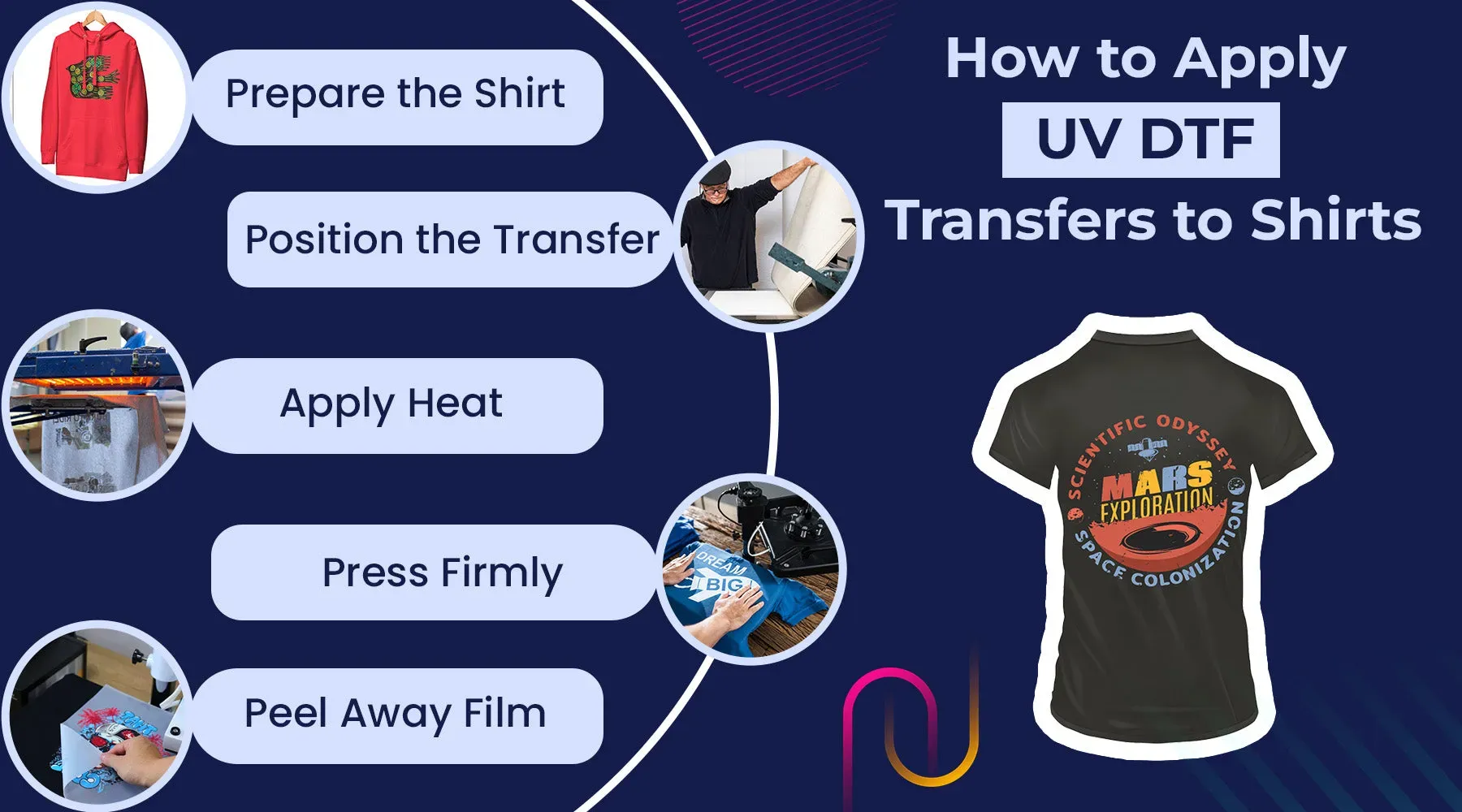
| Step-by-Step Overview | - Design & color prep; - Print onto transfer film; - Cure the print; - Powdering (optional); - Pre-press fabric; - Transfer & heat press; - Finishing and care. |
| Color Management & Hand Feel | - Aim for vibrant color with a soft hand; - Balance ink thickness and carrier; - Test different films and temperatures per fabric. |
| Troubleshooting & Best Practices | - Fading: ensure complete cure and proper heat transfer; - White halos: fix film alignment; - Cracking/peeling: adjust heat/time; - Keep workspace clean and document precise settings. |
| Applications & Comparison | - Suited for small runs and on-demand printing; - Complements screen printing and DTG; - Offers detailed prints on diverse fabrics but needs proper curing and finishing. |