
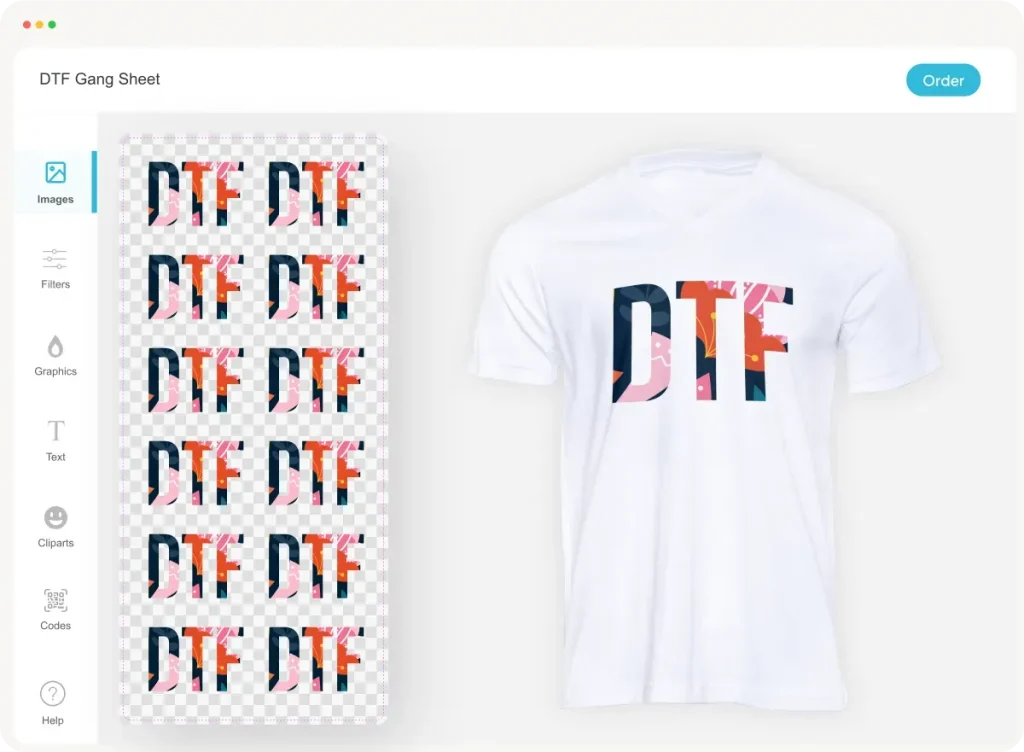
DTF Gangsheet Builder is a practical, beginner-friendly system that helps you plan, organize, and print multiple designs on one sheet for direct-to-film transfers, and its layout-first approach invites you to map colorways, margins, and print areas before a single sheet hits the press. For those new to DTF printing, it translates a potentially daunting idea into a straightforward workflow and supports DTF printing for beginners by addressing setup, color separations, and how gang sheets translate to real garments. By standardizing layouts and reusable templates, you can cut material waste, speed up setup, and maintain consistency across bulk garment runs with DTF, with predictable production times, easier batch replication, and reduced risk of misprints on large orders. The framework emphasizes practical steps over jargon, guiding you from batch planning to the first successful transfer without getting overwhelmed, and you’ll learn to size artwork correctly, apply bleed margins, and test with a quick pilot before scaling. As you test colors and prepare designs, focus on a scalable DTF transfer sheet layout that yields reliable results across multiple garments, ensuring smooth handoffs to printing, curing, and pressing stages as you expand your catalog.
From a different angle, what you’re building is a DTF gangsheet that bundles several designs into one print, a strategy that saves time and keeps production predictable. For beginners, this approach aligns with DTF printing for beginners concepts, emphasizing creating DTF gang sheets, proper DTF transfer sheet layout, and careful testing on pilot garments before scaling. As you move toward bulk garment runs with DTF, you’ll notice faster throughput, more consistent color, and a modular workflow you can reuse across similar orders.
DTF Gangsheet Builder: A Beginner-Friendly Path to Efficient Bulk Garment Runs
The DTF Gangsheet Builder is a practical approach designed for beginners who want to plan, organize, and print multiple designs on a single sheet for DTF transfers. By adopting a gangsheet mindset, novices can speed up workflow, reduce material waste, and achieve consistent results across bulk garment runs. This subheading introduces the core concept and highlights how a simple framework can transform the way you think about DTF printing for beginners.
With a clear, repeatable process, you’ll learn to standardize layouts, optimize machine time, and minimize handling. The DTF Gangsheet Builder helps you move from trial and error to a reliable system that scales as your catalog grows, ensuring predictable outcomes for dozens or hundreds of garments.
DTF Printing for Beginners: Grasping Gang Sheets and Layouts
DTF printing for beginners often starts with understanding gang sheets—large sheets that hold multiple designs before transfer. This concept makes it easier to manage color separations, margins, and alignment, setting the foundation for a smooth transition from concept to production. By using gang sheets, beginners can learn how to optimize the transfer process while minimizing misprints.
As you gain confidence, you’ll see how the DTF transfer sheet layout becomes a central pillar of your workflow. Emphasizing careful planning, consistent margins, and grid-based placement helps you reproduce results across future orders, reducing the learning curve for new designs.
Creating DTF Gang Sheets: Grids, Templates, and Precision
Creating DTF gang sheets starts with a precise grid and reusable templates. A grid-based approach ensures uniform margins and spacing, making it easier to scale layouts for different sheet sizes and print beds. This section emphasizes the importance of grid precision and how labeling each cell with the design name and variant keeps production organized.
Templates enable rapid iteration while preserving alignment accuracy. By storing a few robust gang sheet templates, you can quickly generate new layouts for new artwork, maintain color integrity, and minimize edge clipping during transfer.
Bulk Garment Runs with DTF: Maximizing Throughput and Consistency
Bulk garment runs are about more than printing volume—they’re about delivering consistent quality at scale. Planning the batch, sequencing designs, and standardizing heat press settings improves throughput and reduces setup time between orders. A well-designed gang sheet layout supports modular workflows, allowing you to reuse and adapt layouts for similar designs across large orders.
As you standardize margins, spacing, and color consistency, you’ll reduce waste and misprints. The DTF gangsheet approach keeps production predictable, enabling better planning for future catalogs and larger runs.
DTF Transfer Sheet Layout: Precision That Delivers on Press
DTF transfer sheet layout focuses on the precise positioning of designs within a gang sheet to ensure accurate final placement on garments. Careful alignment, safe margins, and thoughtful bleed considerations prevent edge clipping and color shifts during transfer.
Labeling grid cells and maintaining a consistent baseline size helps when scaling designs for multiple orders. A disciplined layout process translates into reliable transfers and fewer reprints across bulk runs.
From Plan to Press: A Practical Step-by-Step DTF Gangsheet Workflow for Beginners
This section translates the concept into action, outlining a practical, step-by-step workflow from planning a batch to pressing garments. Start by listing designs and colorways, choose a common sheet size, and set up your gang sheet grid with consistent margins. This planning stage reduces surprises later in production.
Next, design and export for print, lay out the gang sheet with precise alignment, and run a test print. After verifying color accuracy and scale, prepare transfer sheets, apply powder, cure as needed, and proceed to bulk pressing while maintaining consistency across garments.
Frequently Asked Questions
What is the DTF Gangsheet Builder and how does it help with DTF printing for beginners?
The DTF Gangsheet Builder is a beginner‑friendly framework for planning, arranging, and printing multiple designs on a single transfer sheet. For DTF printing for beginners, it helps map designs, standardize layouts, and maximize printer time, reducing waste and setup time while delivering repeatable results across bulk garment runs.
How does the DTF Gangsheet Builder assist with creating DTF gang sheets for bulk garment runs with DTF?
It guides you through creating DTF gang sheets by listing designs, colorways, and sizes, then placing them on a grid that matches your print bed. This approach is ideal for bulk garment runs with DTF because it maximizes sheet usage, minimizes handling, and makes it easy to reuse layouts for similar orders.
What is a DTF transfer sheet layout and how does the DTF Gangsheet Builder optimize it?
A DTF transfer sheet layout is the arrangement of all designs on one printable sheet for transfer to garments. The DTF Gangsheet Builder optimizes it by enforcing precise margins, grid spacing, and alignment cues, reducing misprints and ensuring consistent color placement across designs on the final garments.
What tools and workflow steps are recommended to get started with the DTF Gangsheet Builder for DTF printing for beginners?
Start with a computer and design software (Illustrator, CorelDRAW, or Inkscape), grid-based templates, and your DTF printer setup (film, powder, curing equipment). Basic steps: plan the batch, design and export, layout on the gang sheet, print a test, plan transfers, and scale to bulk pressing. This keeps it beginner-friendly while building a repeatable process.
How can you scale from a small test batch to bulk garment runs using the DTF Gangsheet Builder?
Begin with a small test print to verify alignment and color, then refine your gang sheet templates. Use version-controlled templates for different designs, and apply the same margins, spacing, and heat-press settings across runs to achieve consistent bulk garment runs with DTF.
What are common challenges when using the DTF Gangsheet Builder and how can you address misalignment, color shifts, and waste in bulk runs?
Common challenges include misalignment on a DTF gangsheet, color shifts, and wasted material. Mitigate by ensuring precise grid setup and padding on the press, calibrating the printer with ICC profiles, leaving safe margins, and maintaining templates and logs to drive repeatable results in bulk garment runs with DTF.
| Key Point | What It Means | Why It Matters for DTF Gangsheet Builder | Practical Tip / Example |
|---|---|---|---|
| Introduction to DTF Gangsheet Builder | A practical, beginner-friendly approach to planning, organizing, and printing multiple designs on a single sheet for DTF transfers. | Speeds up workflow, reduces material waste, and ensures consistent results across bulk garment runs. | Start with a simple gang sheet layout and reuse the layout for similar designs to build confidence. |
| Gang sheet concept | A single print sheet that contains multiple designs or colorways; you print one large sheet, cover with film, apply transfer powder, and later hot-press each panel onto garments. | Maximizes machine time, reduces handling, and scales well for bulk runs. | Use a grid-based template with margins and spacing to maintain alignment and consistency. |
| Getting started: tools and setup | Needed tools and workflow: design software, layout templates, color/bleed considerations, DTF printer and film, adhesive powder, curing equipment. | Enables clean, scalable layouts and repeatable results. | Choose familiar tools and templates; calibrate margins and alignment early. |
| Basic workflow steps | Plan batch; design/export; layout on gang sheet; print test run; transfer planning; bulk press and verify. | Reduces misprints, misalignment, and rework; improves throughput. | Always run a test print on a single sheet before committing to full batch. |
| Step-by-step guide (beginners) | Step 1 Define batch; Step 2 Set up grid; Step 3 Place designs; Step 4 Preview/export; Step 5 Test/adjust; Step 6 Scale to bulk. | Provides an actionable process to build a routine. | Label grid cells with design names and color variants; maintain a baseline size for reuse. |
| Tips for optimizing workflow | Reuse templates; standardize margins and spacing; maintain color consistency; save presets; track output. | Improves repeatability and efficiency across dozens or hundreds of garments. | Create versioned templates for different designs; log outputs for future batches. |
| Common challenges | Misalignment during transfer; color shifts after transfer; bleed and edge symptoms; wasted material. | Helps identify issues early and reduces scrap or reprints. | Calibrate printer, use ICC profiles, leave safe margins to avoid clipping. |
| Real-world example | A small batch example: 20 t-shirts with two designs and three sizes; a gang sheet grid is planned for efficient production. | Demonstrates practical application and benefits in bulk runs. | Plan for sizes and test print to ensure spacing and alignment. |
| Final thoughts / Best practices | Gangsheet-centric workflow is foundational; stay organized; document layouts; maintain templates for future orders. | Builds a scalable, reliable process as volume grows. | Log outcomes, refine templates, and scale gradually. |
Summary
DTF Gangsheet Builder is a practical framework for planning, organizing, and printing multiple designs on a single sheet for direct-to-film transfers. This approach helps beginners speed up production, reduce waste, and achieve consistent results across bulk garment runs. By starting with simple templates, documenting layouts, and gradually scaling, you build a repeatable system that supports growing catalogs in DTF printing.

