
UV DTF transfer opens up new possibilities for on-demand apparel customization, giving small shops and DIY makers a practical path to vivid, durable prints. In the realm of UV DTF printing, the ink is cured with ultraviolet light, producing sharp detail and color stability across light and dark fabrics. For many shops, this method supports low minimums and fast turnarounds, making prototypes, limited runs, and test orders feasible. DIY maker practices become accessible with straightforward workflows, affordable equipment, and hands-on guidance you can apply in a home studio. This approach can deliver vibrant, durable results across a range of apparel and accessories.
Viewed through alternate terminology, ultraviolet-curable ink transfers on garment films offer a modern route to textile decoration. The core components include a UV-curable ink system, an adhesive transfer film, and a precise heat-press workflow that yields durable, color-rich results. This aligns with DTF transfer for small businesses. For readers seeking practical, scalable processes, the description here maps to broader concepts like digital textile printing and on-demand customization.
1) Understanding UV DTF Transfer: How It Works and What It Delivers
UV DTF transfer blends a UV-curable ink system with a digital transfer process to create a durable, high-resolution print on fabric. By curing the ink with ultraviolet light, the image hardens on the transfer film, helping to prevent smudging and improve edge definition during handling. This approach stands apart from traditional solvent-based or aqueous inks used in other transfer methods, offering a clean, crisp result across many substrates.
For those exploring apparel printing with DTF, UV DTF transfer often delivers excellent color density on both light and dark fabrics, with strong resistance to fading after washing. When evaluating UV DTF printing options, look for proof-of-concept samples that show adhesion on your typical fabrics, especially dark textiles, and consider how the adhesive layer and heat-press settings influence finish and durability.
2) Getting Started with UV DTF: Materials, Inks, Films, and Presses
A practical starter kit for UV DTF transfer includes UV-curable inks or a UV printer, a compatible transfer film with an adhesive layer, a heat press with reliable temperature control, and either easy-release or cold-release sheets depending on the product. Selecting the right film and adhesive is crucial for strong bond and clean release across multiple fabrics, from cotton tees to blends and certain non-wovens.
Alongside the gear, assemble fabric samples and test swatches to dial in curing times, temperatures, and pressure. For small businesses and DIY maker projects, it’s common to work with suppliers who can provide swatches and technical specs to match your fabric choices, helping you avoid costly misprints and shortening your learning curve.
3) Designing for UV DTF: Color, Underlays, and Substrate Considerations
When designing for UV DTF transfer, factor in color management, especially on dark fabrics. A white baseline or an opaque underlayer is typically required to preserve brightness and contrast, and designers should anticipate hue shifts that can occur during curing or transfer. This makes understanding UV DTF printing workflows essential for achieving the intended look on each garment.
Substrate choice matters as much as the artwork. Cotton and cotton blends usually respond well to UV DTF transfer, while synthetics may require adhesive adjustments or pre-treatments. As you plan product lines—whether apparel printing with DTF or broader items like bags or pouches—test adhesion and color fidelity on representative fabrics to prevent post-purchase surprises.
4) The Step-by-Step UV DTF Workflow: From Artwork to Finished Garment
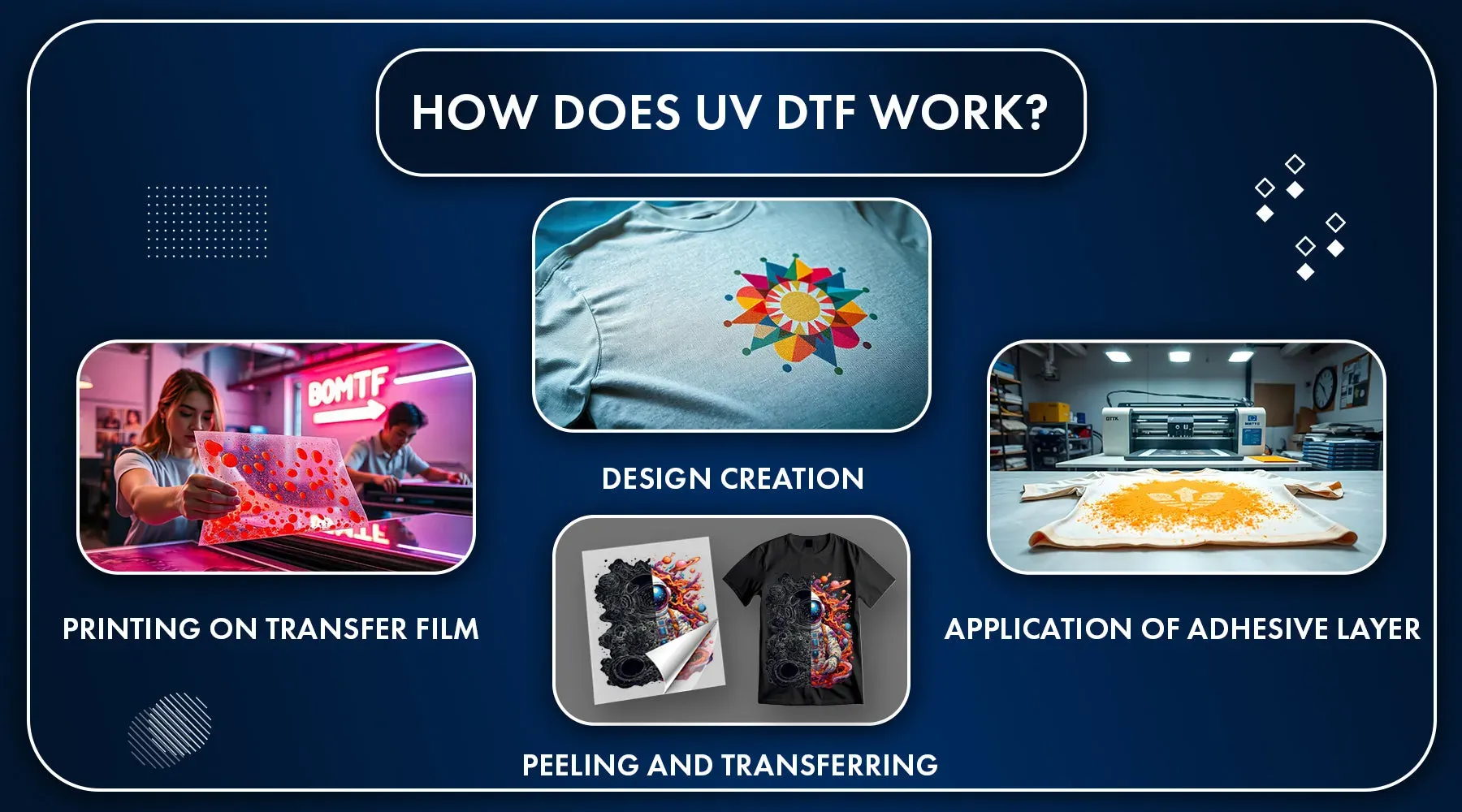
A repeatable workflow is key for consistency in small runs or prototype launches. Start with design and preparation in a vector or high-resolution format, ensuring color management considerations for dark fabrics. If required, mirror the image for the transfer and verify the correct printing side of the film before production.
Next, print on the transfer film using your UV system or a supplier, cure the printed sheet, and prepare the garment with proper alignment. Press using the recommended temperature and dwell time for the transfer product, then perform a peel at the correct stage (warm or cold) per guidelines. Finish with any post-press handling steps to ensure edge fidelity and wash durability.
5) Quality Control, Troubleshooting, and Common Pitfalls
Quality control is essential when offering UV DTF transfer as part of an on-demand service. Focus on substrate compatibility, color management, and image resolution to ensure consistent results across the catalog. Regular wash tests help verify durability, while careful edge handling and even pressure prevent ghosting and misalignment on larger designs.
Common issues include color bleeding on dark fabrics, premature peeling after washing, cracking in flex zones, and uneven color density. Remedies range from adjusting underlays and curing settings to validating heat press calibration and ensuring uniform pressure across the transfer surface. Documenting the process and keeping references from suppliers helps maintain stable results for DIY maker transfers and small-batch runs.
6) Real-World Use Cases, ROI, and Growth with UV DTF
UV DTF transfer shines for local teams, events, and limited runs of apparel and accessories. From T-shirts and hoodies to tote bags and hats, the vibrant color range and durable finish enable quick iterations and personalized products at modest investment. This makes it a practical option for those pursuing DTF transfer for small businesses and exploring new product lines.
When evaluating ROI, consider total cost per print, labor time, and the ability to scale with on-demand production. Prototyping, collaborations with local artists, and seasonal designs can broaden your catalog without heavy upfront overhead. For DIY makers, UV DTF offers a flexible path to high-quality prints, helping you deliver customized gifts and limited-edition items with speed and consistency.
Frequently Asked Questions
What is UV DTF transfer and how does it differ from traditional DTF transfer methods?
UV DTF transfer uses UV-curable inks printed on a transfer film, which is then heat-pressed onto fabric and cured with ultraviolet light. This typically yields crisper edges, denser color, and less smearing than traditional solvent- or aqueous-based inks used in some DTF transfers. It supports high detail on light and dark fabrics and is well suited for small runs and prototypes.
Why is UV DTF transfer practical for small businesses and makers when considering DTF transfer for small businesses?
UV DTF transfer supports on-demand production with low minimums, fast iteration, and broad substrate compatibility, making it attractive for DTF transfer for small businesses. It lets you start with small batches, test designs, and scale up as demand grows without expensive setup costs. This flexibility is especially beneficial for DIY makers and small teams.
What DIY maker transfer techniques can help beginners get started with UV DTF transfer?
For DIY makers, start with fabric swatches and simple tests to dial in temperature, time, and pressure. Use white underbases on dark fabrics and mirror images when required. Cure the film after printing, keep careful notes, and run small proof prints before committing to larger runs. Rely on supplier swatch sets and documented guidelines to stay consistent.
Which substrates are compatible with UV DTF transfer for apparel printing with DTF?
UV DTF transfer works well on cotton and cotton blends and can suit some poly blends with the right adhesive and pre-treatments. It also supports non-apparel items like bags or hats when the transfer film and adhesive are appropriate. Always test adhesion and wash durability on representative fabrics before full production.
What is a practical workflow for design, print, and press when using UV DTF transfer?
Practical workflow: (1) design and prepare artwork with color management, (2) mirror the image if required, (3) print on the transfer film using UV DTF printing, (4) cure the ink and allow handling time, (5) position the transfer on the garment, (6) press at the recommended temperature, time, and pressure, (7) peel as directed. Maintain a repeatable process and run test prints for each fabric type.
How should a small business estimate cost, ROI, and scale for UV DTF transfer projects?
Estimate ROI by calculating cost per print (films, ink, adhesive, wear) and upfront investment (UV printer or supplier, heat press), plus labor. Consider on-demand sales, shorter turnaround times, and the potential to command premium pricing for custom work. Plan for growth by expanding product lines and strengthening supplier relationships to reduce per-unit costs as volume increases.
| Key Point | Summary |
|---|---|
| What UV DTF transfer is | UV-curable ink on a transfer film cured by UV light to create a durable print when pressed onto fabrics. |
| How it differs from other transfer methods | Uses UV-curable inks that cure immediately, reduce smearing, and support a broad substrate range. It yields crisp lines and smooth gradients, often contrasting with solvent-based or aqueous inks. |
| Benefits for small businesses and makers | On-demand production with low minimums, fast iterations, broad substrate compatibility (including non-apparel items when treated correctly), and the ability to prototype quickly while delivering vibrant, durable results. |
| Getting started: materials and setup | UV-curable inks or a UV printer; transfer film with adhesive; heat press with accurate temperature control; easy-release or cold-release sheets; fabric samples for testing. |
| Design, print, and press workflow | 7 steps: design artwork; mirror if needed; print on transfer film; allow curing; align on garment; press with correct settings; peel and finish. |
| Quality considerations | Substrate compatibility, color management, image resolution, edge handling, and wash durability. Calibrate colors and test on representative fabrics. |
| Common mistakes and fixes | Bleeding on dark fabrics; peeling after washing; cracking on flex areas; uneven color density. Fixes include proper white underbase, correct temperature/pressure, and even contact. |
| Use cases and creative ideas | T-shirts and hoodies for teams or events; tote bags, pouches, or hats; limited edition runs; custom gifts for weddings, birthdays, or corporate events. |
| Budgeting, ROI, and scale | Consider cost per print (materials, ink/adhesive, press wear), labor, and turnaround. ROI improves with supplier relationships, bulk purchases, and scalable workflows. |
| Practical takeaway | UV DTF transfer is a flexible, scalable option for many small shops and DIY studios. Start with a solid test plan, calibrate your workflow, and iterate toward reliable, market-ready results. |