
High-Volume UV DTF Transfer Production is more than a buzzword; it’s a disciplined approach to turning multiple orders into reliable, repeatable results without sacrificing quality, a mindset that helps brands and print shops serving large client bases or seasonal peaks deliver on time and maintain consistent print fidelity under pressure, even when supply chains tighten and production windows shrink, and build resilience into your supply chain planning, vendor vetting, and on-site safety practices. By focusing on the DTF transfer production workflow and the nuances of UV DTF ink drying and curing, teams can optimize throughput, minimize waste, and preserve color consistency across large batches, while also building resilience for high-volume UV DTF printing and reducing operator fatigue. This guide distills battle-tested strategies that align equipment, materials, color management, curing, finishing, and DTF transfer quality control to deliver repeatable results from dozens to thousands of transfers per day, with built-in feedback loops that catch drift before it compounds. From workflow design and color management to UV DTF post-press finishing, the content outlines practical steps for scaling operations without compromising adhesion, image fidelity, or finish, and it emphasizes documentation, automation, and proactive maintenance. Ultimately, the goal is a scalable process that delivers vibrant, durable transfers at predictable throughput while keeping costs in check and downtime to a minimum, so teams can meet rising demand and adapt to new substrates and techniques without sacrificing quality.
In practical terms, this translates to mass-scale UV-curable DTF printing that pairs rapid color reproduction with consistent adhesion across substrates. Viewed through an LSI lens, the idea becomes a high-capacity transfer operation where color accuracy, print consistency, and dependable finishing standards drive profitability during peak demand. The focus shifts from single-job perfection to repeatable recipes, calibration routines, and automation that maintain uniform layouts, ink behavior, and drying and curing across batches. By adopting a holistic approach to pre-production planning and post-press finishing, teams create a resilient pipeline that scales with market needs.
High-Volume UV DTF Transfer Production: Maximizing Throughput and Quality
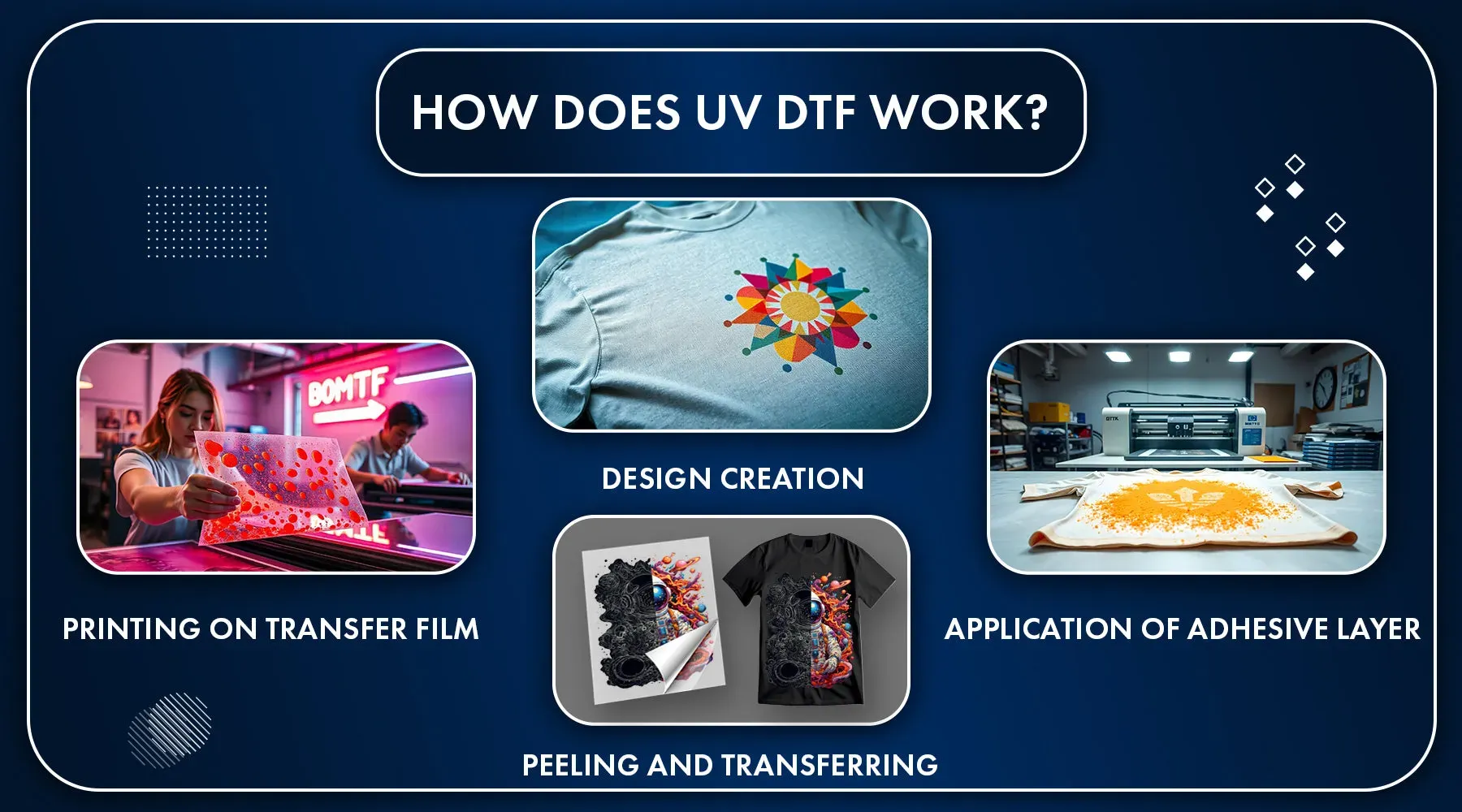
High-volume UV DTF transfer production is a disciplined approach that blends process design with controlled execution to deliver repeatable results at scale. When done well, it leverages a coherent DTF transfer production workflow to convert dozens or thousands of transfers per day into dependable, on-time deliveries. In the context of high-volume UV DTF printing, throughput isn't simply about faster machines—it’s about optimized file prep, substrate handling, and a well-tuned DTF transfer production workflow that preserves color fidelity across batches.
To translate strategy into outcomes, establish batch sizing, standardized color profiles, and traceability. A robust workflow reduces manual handling, minimizes downtime, and sets a cadence for pre-flight checks, printing, curing, and finishing. This framing aligns with UV DTF ink drying and curing requirements, ensuring a reliable buffer between job changeovers and the start of new runs.
Building a Scalable DTF Transfer Production Workflow for Consistency
Designing a scalable DTF transfer production workflow begins with the end in mind: predictable color, stable adhesion, and minimal waste across large runs. Map each phase—from pre-production file prep to post-print handling—and codify the checks that separate good runs from rejects. In practice, this means explicit color targets, substrate compatibility checks, and a batch-ticket system that captures color targets, substrate type, and curing requirements. Aligning these elements with the goal of reliable output keeps the operation focused on consistency rather than ad-hoc fixes.
Automation and visibility are the accelerants here. Job submissions, queue management, and automated spooling-level handoffs reduce manual touchpoints and human error. As you tighten the DTF transfer production workflow, you’ll find that you can scale without sacrificing color accuracy, print registration, or overall efficiency—key ingredients for sustaining growth in high-volume UV DTF printing contexts.
UV DTF Ink Drying and Curing: Speed, Adhesion, and Reliability
Drying and curing drive throughput and durability in UV DTF transfer projects. UV-curable inks cure rapidly under calibrated lamp exposure, enabling tighter production windows. Yet pushing curing too hard risks substrate distortion or brittle finishes, so balance is essential to maintain adhesion and print fidelity at scale. This balance is central to UV DTF ink drying and curing as a controllable parameter in every large batch.
Practical controls include maintaining uniform lamp intensity, ensuring even coverage across the bed, and scheduling dwell times to minimize smudges when handling fresh transfers. Batch curing, when designed into the line layout, can shave minutes from cycle times without compromising color integrity. Environmental controls—airflow, humidity, and venting—help prevent drift and keep results consistent across thousands of transfers.
DTF Transfer Quality Control: Guardrails for Large-Scale Production
Quality control is the invisible backbone of successful high-volume runs. A robust QC framework uses objective targets and instrument-assisted checks to prevent drift from creeping into batches. Incorporate inline spectrophotometers or colorimeters to track color drift, and maintain a library of standardized test swatches that reflect common garment colors. The aim is a repeatable standard that reduces reprints and protects margins in a high-volume DTF context, anchored by DTF transfer quality control guidelines.
Structure QC across pre-print, in-process, and post-print stages. Pre-print checks validate substrate compatibility and film quality; in-process monitoring catches misalignment or color shifts early; post-print inspection verifies adhesion, curl, and edge sharpness. Documenting pass/fail criteria makes it easier to isolate root causes and keep large batches moving smoothly.
Pre-Production Planning for Consistent Color Management in High-Volume UV DTF Printing
Pre-production planning sets the foundation for consistent color across many transfers. Establish standardized ICC profiles tailored to each substrate and ink set, and run test prints to confirm targets before full-scale runs. Color management hinges on calibrations, gamma adjustments, and profiling that map digital colors to physical outputs—critical when operating in high-volume UV DTF printing environments where small shifts compound across thousands of units. This is a core component of the DTF transfer production workflow and a practical defense against variation.
Also implement batch sizing rules, quick-change kits, and robust traceability so operators can switch between designs with minimal downtime. Clear batch IDs, labeling, and documentation support rapid troubleshooting if problems arise mid-run. As you scale, automation for job submissions and queue management becomes a strategic advantage for maintaining color consistency and throughput.
UV DTF Post-Press Finishing: Streamlining Batch Finalization
Post-press finishing ties the print to the garment or surface with reliability and speed. After transfer application, finishing steps typically include cooling, inspection, and proper stacking to minimize handling damage. Document standard pressing times, temperatures, and pressure for different fabrics, and align these with your UV DTF post-press finishing practices to ensure consistent outcomes across batches. A well-designed finishing process reduces downtime and elevates perceived quality in high-volume operations.
Streamlined finishing sequences also protect margins by reducing waste and rework. Prioritize a routine maintenance schedule for presses and heat-transfer equipment, and maintain a log of common finishing issues and remedies. When you couple post-press finishing discipline with ongoing process optimization, you create a scalable cadence that sustains quality as demand grows.
Frequently Asked Questions
What is High-Volume UV DTF Transfer Production and why is it important?
High-Volume UV DTF Transfer Production is a disciplined approach that turns many orders into reliable, repeatable results without sacrificing quality. It emphasizes throughput and consistency across large batches, supported by UV-curable inks, optimized pre-production, color management, and scalable workflows to maintain color fidelity and adhesion.
How can the DTF transfer production workflow be optimized for high-volume runs?
Design a streamlined DTF transfer production workflow from file to finish, including standardized file prep, ICC-based color management, batch sizing rules, a clear job-ticket system, and a batch-friendly curing strategy to minimize handling while preserving alignment and color accuracy.
What should I know about UV DTF ink drying and curing in high-volume production?
UV DTF ink drying and curing is central to speed and reliability. Ensure uniform lamp coverage, manage exposure time to avoid over- or under-curing, provide adequate ventilation, and use batch curing to boost throughput while maintaining adhesion and print integrity.
How do you implement DTF transfer quality control in high-volume environments?
Institute QC checkpoints across pre-print, in-process, and post-print stages with clear pass/fail criteria. Use instrument-assisted checks (e.g., inline spectrophotometers), standardized test swatches, adhesion tests, and calibration logs to reduce reprints and protect margins.
What are best practices for UV DTF post-press finishing in high-volume production?
Standardize post-press finishing steps such as removing adhesive carriers, heat-press transferring, cooling, stacking, and packing. Set consistent pressing times, temperatures, and pressures for different fabrics to minimize handling damage and stabilize production flow.
How can a shop scale High-Volume UV DTF Transfer Production while keeping costs under control?
Invest in robust materials and equipment, develop batch-based cadences, and implement automation for job submissions and queue management. Plan scalable growth by adding printers, curing stations, or automated film handling, while maintaining traceability, preventative maintenance, and a clear quality framework to protect margins.
| Topic | Key Points |
|---|---|
| Understanding the scope | Throughput, consistency, and turnaround times; UV enables faster drying; optimize phases (pre-production, printing, curing, post-processing, packaging) with a well-designed workflow coordinating people, machines, and materials. |
| Pre-Production Planning | Standardized color profiles and substrate checks; batch sizing rules; ICC calibration and test prints for each job/substrate family; quick-change kit; labeling, batch IDs, traceability; automation for submissions, queue management, and automated spooling. |
| Materials and Equipment | High-duty-cycle UV DTF printers; UV-curable inks; steady supply of transfer films, inks, and adhesive powders; controlled storage; calibration tools; routine maintenance (printhead cleaning, nozzle checks, lamp validation) to minimize misprints. |
| DTF Transfer Production Workflow | Efficient file prep and color management; standardized job-ticketing; streamlined print-to-film path; consistent speeds and alignment; controlled curing with exposure/lamps; batch curing to reduce cycle times; minimize handling while preserving color accuracy. |
| Color Management and Print Quality | Instrument-assisted checks (spectrophotometers/colorimeters); standardized test swatches; verify ICC profiles and adjust gamma/hue/saturation; monitor edge sharpness, dot uniformity, and adhesion across transfers. |
| UV DTF Ink Drying and Curing | Fast curing with UV inks; avoid over-curing to prevent distortion; ensure uniform lamp coverage; batch curing fixtures; monitor drying times; manage air/ventilation and climate control for consistent results. |
| Quality Control Across the Line | QC checkpoints with pass/fail criteria; visual and instrument-based checks; daily calibration, batch color audits, final adhesion/color checks; pre-print (substrate/adhesive/film), in-process (printhead health), and post-print (adhesion, curl, powder) checks. |
| Post-Processing and Finishing | Remove excess adhesive, transfer to substrate with heat press, cool and inspect; define consistent pressing times/temps; proper stacking/packing to minimize damage and keep line moving. |
| Maintenance, Troubleshooting, and Scaling Up | Regular preventative maintenance; log common defects and remedies; plan for scaling (more printers, expanded curing, automated film handling) with a documented workflow. |
| Real-World Best Practices | Repeatable file prep and color management; batch-based cadence; robust curing; QC guardrails; meticulous maintenance records and parts planning. |