
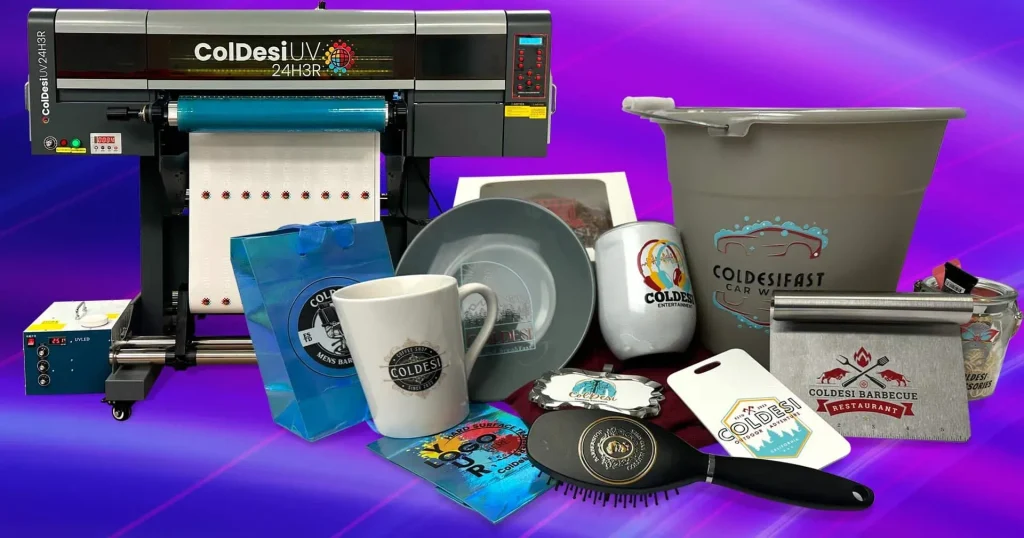
In the ever-evolving landscape of the textile industry, UV DTF printing emerges as a key player in redefining textile printing technology. This innovative method combines the efficacy of ultraviolet light with direct-to-film (DTF) processes, offering unparalleled advantages in terms of efficiency and print quality. As brands increasingly prioritize sustainable printing methods, UV DTF stands out by employing inks that are not only vibrant but also more environmentally friendly than traditional options. The capability to produce high-quality textile prints quickly and cost-effectively makes this technique ideal for custom textile printing needs. By embracing UV DTF printing, manufacturers can meet growing consumer demands for creative and sustainable designs while enhancing their overall production capabilities.
The textile printing sector is experiencing a significant transformation, notably through the rise of UV Direct-to-Film (DTF) methods, which are revolutionizing how prints are produced. This cutting-edge printing approach utilizes ultraviolet technology to cure inks, allowing for seamless application on various materials. As the industry shifts towards efficient and sustainable solutions, alternative phrases like advanced textile printing processes and eco-friendly printing mechanisms highlight the critical shift in practices. The demand for bespoke textile prints continues to surge, with UV DTF providing a means to create striking designs while maintaining environmental responsibility. This blend of innovation and sustainability positions UV DTF printing as an essential component for the future of this dynamic industry.
Understanding UV DTF Printing
UV DTF (Direct-to-Film) printing represents a crucial advancement in the textile printing landscape. This innovative method harnesses ultraviolet light to cure inks, essentially creating a high-quality transfer film suitable for a variety of fabric types. Unlike traditional methods that often require multiple steps and materials, UV DTF simplifies the printing process, allowing for more intricate designs and quicker production times. This versatility is essential in today’s fast-paced consumer market, where demand for unique and custom textile solutions is continuously rising.
One of the standout features of UV DTF printing is its ability to produce vibrant, detailed prints with excellent durability. The technology enables printing on various substrates, even those with complex textures, expanding the creative possibilities for designers. As brands increasingly seek to differentiate themselves in a crowded marketplace, the high-quality outputs achievable through UV DTF become a compelling differentiator, ensuring their products stand out and maintain visual integrity over time.
The Role of Sustainable Printing Methods
Sustainability is an important factor influencing industrial practices today, and UV DTF printing aligns perfectly with this trend. By utilizing UV inks that are free from harmful solvents, UV DTF printing minimizes environmental impact, assuring consumers of greener options. The shift towards sustainable textile printing methods is more than just a trend; it reflects a growing awareness among consumers demanding accountability and responsibility from brands. This transition to eco-friendly practices also helps manufacturers meet stringent regulations and improve their marketability.
Moreover, the energy efficiency inherent in UV DTF technology significantly reduces the carbon footprint associated with production. Unlike traditional printing processes that may generate considerable waste and require extensive energy consumption, UV DTF aligns production goals with sustainability initiatives. This commitment to eco-conscious methods not only benefits the environment but also enhances brand reputation in an era where consumers value sustainability as a key purchasing criteria.
Enhancing Printing Efficiency with UV DTF Technology
Printing efficiency is critical in the textile industry, where quick turnarounds and high production volumes are paramount. UV DTF technology excels in this regard, allowing manufacturers to produce superior-quality prints faster than ever before. The streamlined production process cuts down on labor and material costs, offering businesses an opportunity to increase their profit margins while satisfying customer demands for both speed and quality. Entering an era where speed and efficiency dictate market success, UV DTF provides a significant competitive edge.
Additionally, the UV curing process used in DTF printing eliminates the need for extensive drying times associated with traditional methods. This not only accelerates output but also supports a more agile production environment, allowing businesses to adapt more swiftly to changing fashion trends or consumer preferences. As a result, the capability to produce custom textile prints on-demand positions UV DTF as a vital player in the future of textile manufacturing.
High-Quality Textile Prints Defined by UV DTF
In an industry where product differentiation hinges on quality, UV DTF printing sets a new standard for high-quality textile prints. The technology’s ability to achieve vibrant colors and intricate details is unmatched, providing designers with a powerful tool to bring their visions to life. The precision offered by UV DTF means that even the most complex designs can be executed flawlessly, allowing for greater artistry in fabric creation. As brands strive to deliver unique and captivating products, the quality produced through UV DTF inherently aligns with these objectives.
Furthermore, the durability of prints produced with UV DTF technology is a game changer. The prints exhibit exceptional resistance to abrasions, fading, and washing, meaning that consumers receive products that not only look good at the time of purchase but maintain their appearance over time. This longevity reinforces customer satisfaction and brand loyalty, establishing a reputation for high-quality textile products that stand the test of time.
Custom Textile Printing: The Future with UV DTF
The rise of personalized and custom textile printing creates exciting opportunities in the fashion and design industries. UV DTF technology facilitates the creation of customized prints on various fabric types, catering to the growing demand for individualized fashion pieces. As consumers increasingly seek unique products that reflect their personal style, the capabilities of UV DTF significantly enhance a designer’s ability to deliver one-of-a-kind creations efficiently.
Moreover, the adaptability of UV DTF printing empowers companies to respond quickly to emerging trends, fostering an environment of experimentation and creativity. Fashion brands can launch limited-edition collections more frequently, supported by the efficiency of on-demand production. This not only satisfies customer desires for exclusivity but also allows brands to minimize waste, as they can produce items in direct response to market demand rather than oversaturating the market with surplus inventory.
The Future of Textile Printing Innovation with UV DTF
UV DTF printing technology signifies not just a change in method but a complete revolution in the textile printing landscape. As designers and manufacturers increasingly embrace this innovative approach, the future of textile printing promises to be more efficient, sustainable, and dynamic. The adaptation of UV DTF means that businesses can meet market demands while maintaining ethical standards, a combination that is vital in the modern textile industry.
Looking ahead, the integration of UV DTF printing is expected to accelerate technological developments that could further enhance print quality and sustainability. As research continues and techniques are refined, the full potential of UV DTF will be unlocked, paving the way for new applications and market expansions. This evolution ensures that the textile industry will not only keep up with consumer expectations but also lead the charge in responsible innovation.
Frequently Asked Questions
What advantages does UV DTF printing offer compared to traditional textile printing methods?
UV DTF printing provides significant advantages over traditional methods like screen printing by offering greater versatility, higher print quality, and faster production cycles. It utilizes UV light for curing inks, which results in vibrant, durable prints that adhere well to various fabric types. This method also supports sustainable printing by using inks free from harmful solvents.
How does UV DTF printing contribute to sustainable printing methods in the textile industry?
UV DTF printing contributes to sustainable printing methods by employing inks that are often free of harmful chemicals and solvents, reducing environmental impact. The energy efficiency of UV curing systems also helps lower the carbon footprint of textile printing operations, aligning with the industry’s move towards eco-friendly practices.
What types of fabrics can be printed using UV DTF printing technology?
UV DTF printing technology is highly versatile, allowing for high-quality textile prints on a wide range of fabrics. This includes cotton, polyester, and even materials with complex textures, making it an excellent choice for custom textile printing across various applications.
Why is UV DTF printing considered efficient in terms of production speed?
UV DTF printing is considered efficient due to its quick curing process facilitated by ultraviolet light, enabling faster production cycles. This technology reduces turnaround times, allowing manufacturers to meet high-volume demands and adapt to market trends swiftly without compromising on print quality.
Can UV DTF printing be used for custom textile printing on-demand?
Yes, UV DTF printing is ideal for custom textile printing on-demand. Its ability to deliver detailed, vibrant prints quickly allows businesses to respond rapidly to fashion trends and customer preferences, making it a practical solution for personalized textile products.
What impact does UV DTF printing have on print quality for textile products?
UV DTF printing significantly enhances print quality by providing high-resolution, detailed outputs that are vivid and long-lasting. This technology ensures that prints maintain their integrity and brilliance even after multiple washes, positioning UV DTF as a leading choice for high-quality textile prints.
| Key Point | Details |
|---|---|
| What is UV DTF Printing? | Uses ultraviolet light to cure inks directly onto film for transfer to fabrics, allowing for vibrant and durable prints. |
| Innovation and Technology | Offers faster and more efficient production compared to traditional methods, with great color depth and adhesion quality. |
| Environmental Benefits | Utilizes UV inks that are free from harmful solvents, contributing to sustainability and reducing carbon footprint. |
| Market Growth and Adoption | Projected substantial growth as manufacturers transition from traditional methods to cost-effective and quality-driven UV DTF printing. |
| Quality and Efficiency | Delivers high-quality prints in less time, enhancing quality control and providing flexibility for designers. |
Summary
UV DTF printing is transforming the textile industry by integrating advanced technology with sustainable practices. This innovative method not only enhances print quality, allowing for high-resolution images that maintain their brilliance over time, but it also addresses environmental concerns by using eco-friendly inks that eliminate harmful solvents. As the market continues to embrace UV DTF printing, businesses are benefiting from increased efficiency, reduced production times, and the ability to quickly adapt to consumer demands. Ultimately, UV DTF printing is paving the way for a future where quality textile products are produced with a keen eye on sustainability, reshaping the very landscape of the textile printing industry.

